The term ‘Big 5’ is known worldwide and describes five of Africa’s most iconic animals that can be seen on safari in Tanzania’s national parks. On Chumbe Island, we took this term into the marine realm where our ‘Big 5’ comprise of a fascinating group of large and threatened marine animals that either live or visit our marine protected area. These marine creatures are not only remarkably beautiful, but also play an essential role in the marine ecosystem. With a bit of luck you can spot them during our guided snorkelling tour!
Common features of Chumbe’s Big 5
- They are on the IUCN Red List of Threatened Species due to overfishing, habitat destruction and climate change, and are in great need of protection from human threats.
- They are all essential to the health of coral reefs and their inhabitants, regulating biodiversity and keeping coral and fish stocks healthy.
Blacktip Reef Shark (Carcharhinus melanopterus)
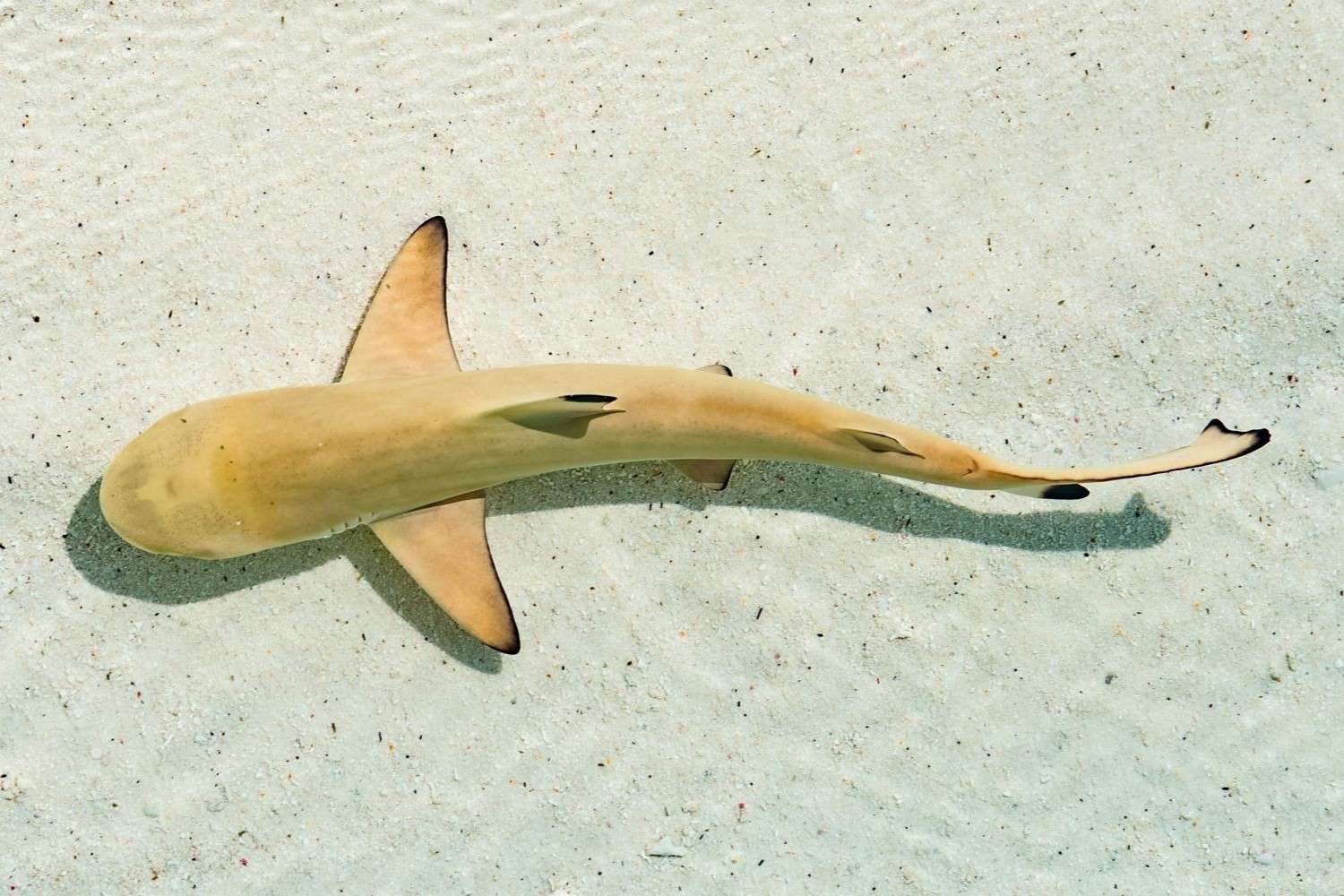
Due to overfishing, blacktip reef sharks have become rare sightings in Tanzania. However, not long after the Chumbe MPA was established in 1991, reef sharks began to appear in the protected reef, but they were extremely shy and sightings were rare. Since 2011, sightings have increased and not only adults but also juveniles are now regularly spotted. Adult blacktip reef sharks can grow to 1.30 m in length and weigh up to 60 kg.
Apart from the much smaller, rarer and nocturnal short-tailed nurse sharks, blacktip reef sharks are the top predators in our waters, occupying the highest position in the food chain. They play an important role in regulating fish populations and keeping coral reefs healthy by preying on sick, old and herbivorous fish. That’s why blacktip reef sharks are important indicators of reef health, maintaining ecological balance and diversity by preventing other species from becoming too dominant.
Sea Turtles
Green Sea Turtle (Chelonia mydas)
The green sea turtle is one of the largest sea turtles, with a broad, smooth carapace, typically brown or olive, and greenish skin. It inhabits tropical and subtropical coastal waters around the world. Males are slightly larger than females, with longer tails, and both have paddle-like flippers that make them strong swimmers. Adult green turtles are primarily herbivorous, eating seagrass and algae, while juveniles also consume invertebrates such as crabs and jellyfish.
Their consumption of seagrass provides an incredibly important ecosystem service, preventing seagrass beds from overgrowing other habitats. Like blacktip reef sharks, they are overexploited for their meat and eggs and are threatened by boat strikes, drowning in fishing nets and and face habitat destruction caused by human activities.

Hawksbill Turtle (Eretmochelys imbricata)

The hawksbill turtle is relatively small compared to the green turtle, reaching up to 1.15 m in shell length and weighing around 68 kg. They inhabit tropical waters of the Atlantic, Pacific and Indian Oceans, preferring coastal areas with abundant sponges, their main food source. Despite their protective shells, they face predation from large fish, sharks, crocodiles, octopuses and humans.
Hawksbill turtles are critically endangered, largely due to human activity. Their beautiful shells have made them a target for the tortoiseshell trade, which continues illegally despite the fact that the trade in hawksbill shells was banned in 1977 by CITES, the Convention on International Trade in Endangered Species of Wild Fauna and Flora. They are also hunted for their eggs and meat, and are threatened by accidental capture in fishing nets. Habitat loss due to coastal development and climate change further endangers them.
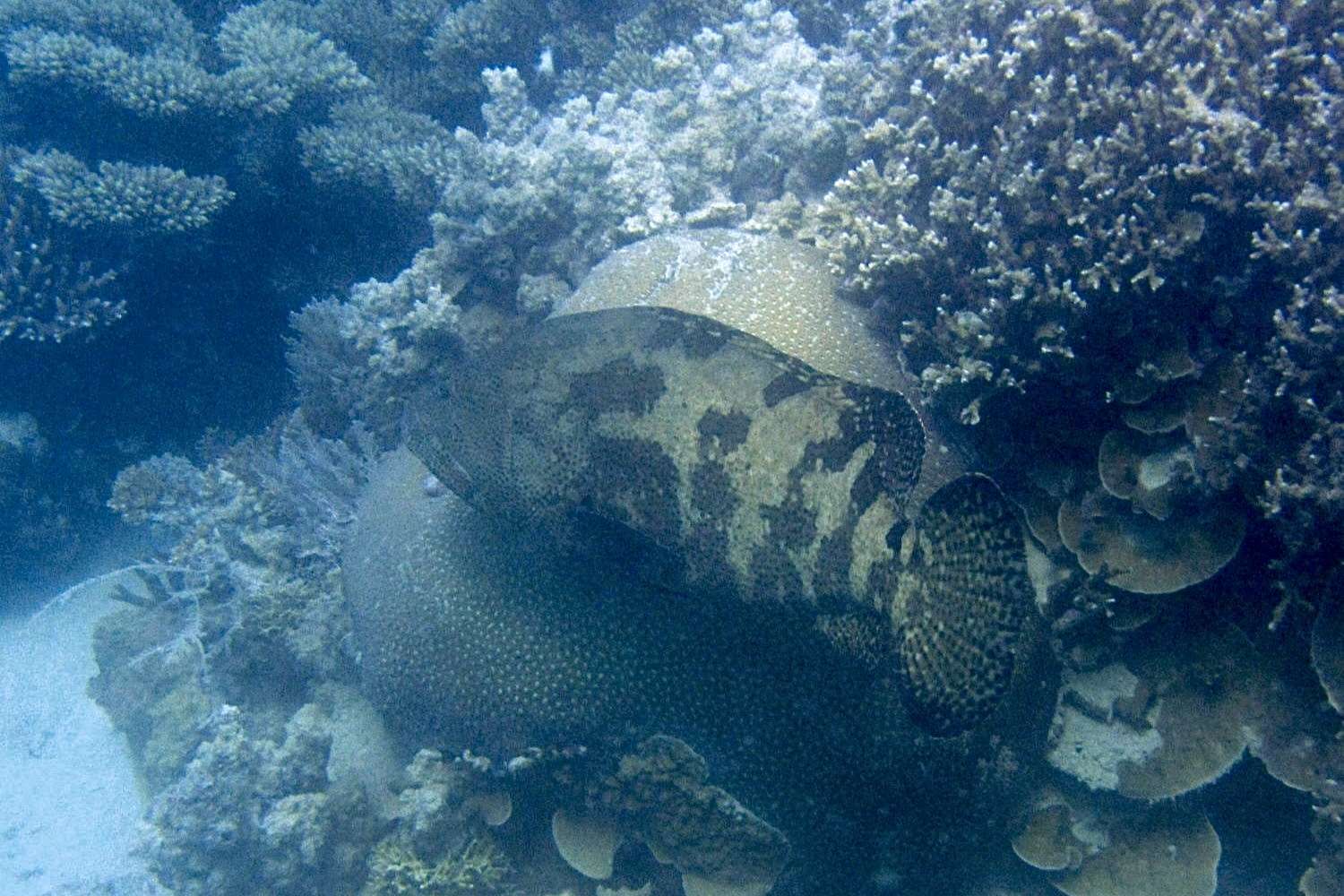
Brown Marbled Grouper (Epinephelus fuscoguttatus)
The brown marbled grouper, also known as the flowery cod or tiger grouper, is a large reef fish found in the Indo-Pacific region, typically inhabiting coral reefs and rocky areas. Characterised by a brownish colour with darker marbled patterns and spots, it can grow to 1.20 m in length and weigh over 20 kg. It helps regulate populations of smaller fish and invertebrates, preventing overgrazing of vital reef-building organisms and ensuring reef resilience.
Groupers have slow growth and low reproductive rates, making their populations particularly vulnerable to overfishing and slow to recover from declines. Due to their size and commercial value, brown marbled groupers are heavily targeted by fisheries, which is one reason why they have been listed as ‘vulnerable’ on the IUCN Red List of Threatened Species since 2004.
Blue-spotted stingray (Taeniura lymma)
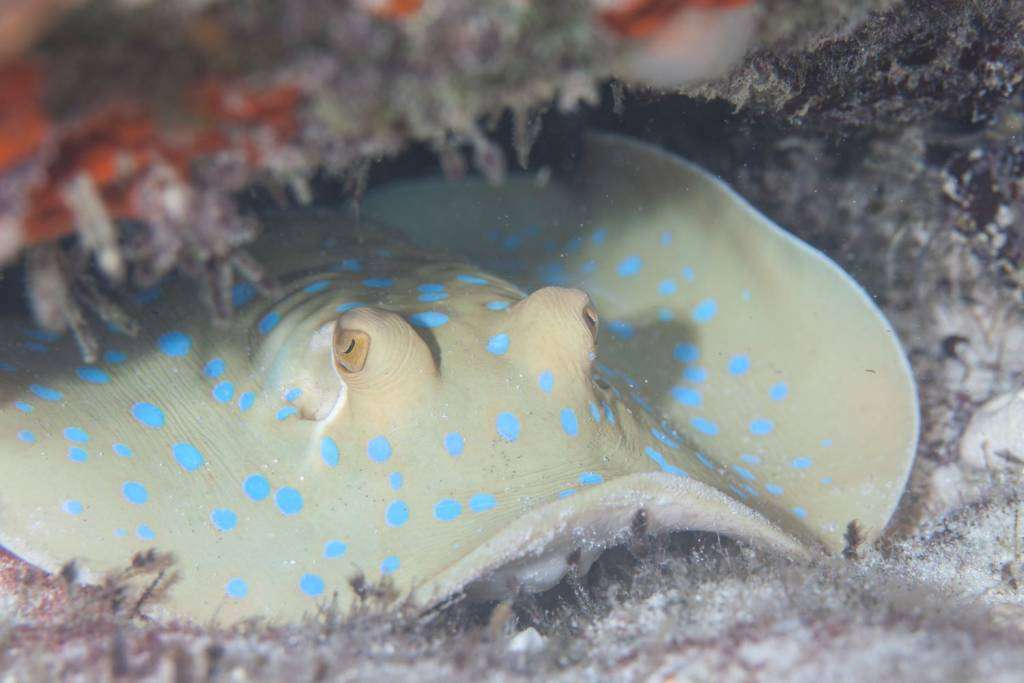
Blue-spotted stingrays are found in the Indo-Pacific region and are easily recognised by their distinctive blue spots scattered across their olive to brown body and long, slender, blue-striped tail. This species typically grows up to 0,35 m across. Blue-spotted stingrays inhabit sandy bottoms, coral reefs and seagrass beds and are often seen partially buried in the substrate during the day. They feed on a variety of invertebrates such as crustaceans, molluscs and small fish, helping to regulate their populations and maintain the balance of the benthic community. One particular ecosystem service they provide is nutrient cycling. By foraging and disturbing the seabed, blue-spotted rays help to aerate and mix sediments, maintaining the health of the benthic part of the ecosystem. They are also listed as ‘Near Threatened’ on the IUCN Red List of Threatened Species.
Dolphins
The waters around Chumbe are home to three important dolphin species: spinner (Stenella longirostris), Indo-Pacific bottlenose (Tursiops aduncus) and humpback (Sousa plumbea). While each species has unique characteristics and behaviours, they share a common role in their ecosystem and face similar threats from human activities. All three feed primarily on fish and squid, making them three of the top predators in the marine food chain. They also regulate fish populations and their foraging activities support nutrient cycling and promote a dynamic and healthy marine environment.

Be part of our Citizen Science project and help monitor our Big Five!

Now that you know who our Big Five are, we want to encourage you to help us monitor them. We believe science should be open to everyone! That is why our guests play a vital role in our research activities. Our approach is simple: whenever you are at Chumbe and see sharks, turtles, dolphins and other occasional megafauna in and around the protected coral reef sanctuary, you can report your sighting to our board on Chumbe Island.
If you have taken a photo of our Big Five while snorkelling at Chumbe, please send it to [email protected].