Activities
Experience the Magic of Zanzibar through Activities on Chumbe Island
Make sure that your perfect trip to Zanzibar includes a visit to Chumbe Island Coral Park! Our activities offer an unforgettable experience, from snorkelling in our protected waters of the Indian Ocean to exploring our private beach and taking a Coconut Crab Walk or Intertidal Walk. Get closer to nature on our Forest Walk, visit historical monuments, and browse a local artisan boutique.
All the following activities are included in your overnight stay on Chumbe Island. It is also possible to take a day trip to the island.


Snorkelling
Chumbe is the best shallow reef snorkelling experience in Zanzibar and one of the best in the Western Indian Ocean. Whether you are a snorkelling newcomer or a seasoned professional, our competent guides will ensure you get the most out of your adventure in a safe and responsible manner. Guided snorkelling tours last about one hour and all equipment is provided.
The Chumbe Reef is a protected sanctuary, famous for its biodiversity, especially its’ hard coral diversity. At least 59 hard coral genera have been scientifically recorded, and these corals act like trees in a forest: they provide home, shelter and food for a wide array of marine species. Reef inhabitants include >500 identified reef fish species, microfauna and critters such as nudibranchs, sponges, mollusks, starfish, clams and other invertebrates, and megafauna such as hawksbill and green turtles, blacktip reef sharks and – if you are lucky – you might even spot dolphins!
All guests are expected to follow the internationally recognised UNEP/Green Fins code of conduct to ensure safety for yourself and the protection of the delicate coral reef.
Digital copies of our unique underwater photo guides (Volumes 1-6) are now available on our download page.

Forest Walk
Explore the Chumbe forest reserve
- Follow the footpath leading down to the magical intertidal mangrove pool, shaded by huge baobab trees. The seawater rises and falls with the tides and you may observe scurrying rock crabs and species adapted to these conditions.
- Enjoy the immersive experience of being surrounded by the most biodiverse coral rag forest habitat in the region, hosting >180 plant species. See how many species you can identify with our ID cards or learn about their medicinal uses from our guides.
- Discover the island’s wildlife, like paradise flycatchers playing in the thicket, and hermit crabs waddling their way over leaves. Spot speckle-lipped skinks chasing up trees, or yellow headed dwarf gecko’s resting on the ground. See if you can find sleeping giant leaf-nosed bats, and delight in the colouful escapades of more than 20 species of butterfly. If you are lucky you might even spot the elusive and critically endangered Aders Duiker antelope that are being hosted on the island as part of Zanzibar’s conservation recovery plan for this species.
- Look closely at the ground to discover fossilized structures of corals and giant clams. Chumbe Island was once a thriving coral reef that became exposed when sea levels dropped more than 15,000 years ago. Try to identify these ancient 15,000-year-old fossils in the rocky, lunar landscape on the eastern side of the island where salt sprays from the sea prevent vegetation from settling.
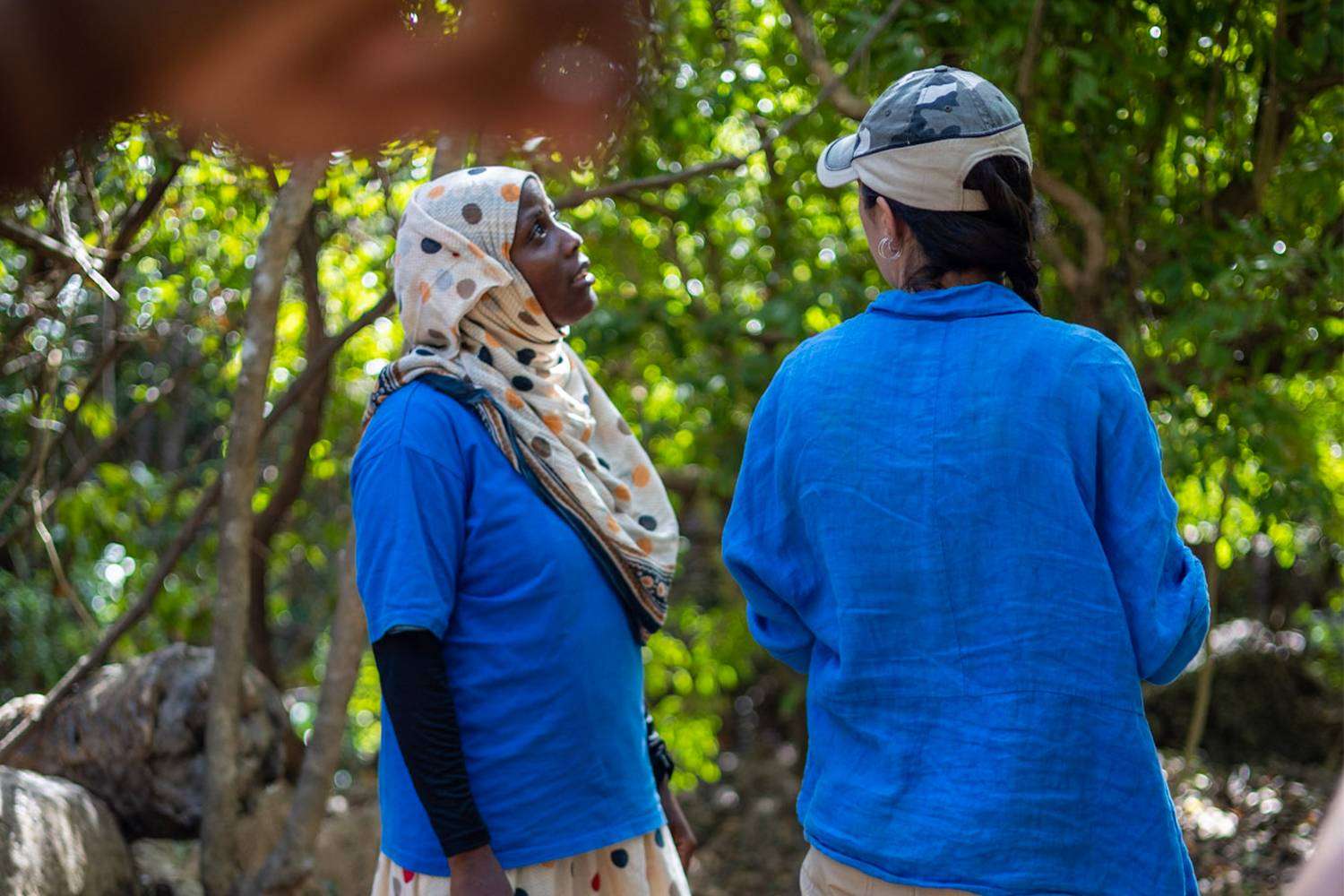
A trail circles the southern part of the dense coral rag forest on Chumbe Island. Venture this trail on your own or join our one-hour guided forest walk where you learn more about the island’s geology, plant adaptations to survive without groundwater, medicinal uses of local trees and shrubs and hidden fauna that are difficult to spot.
Intertidal Walk
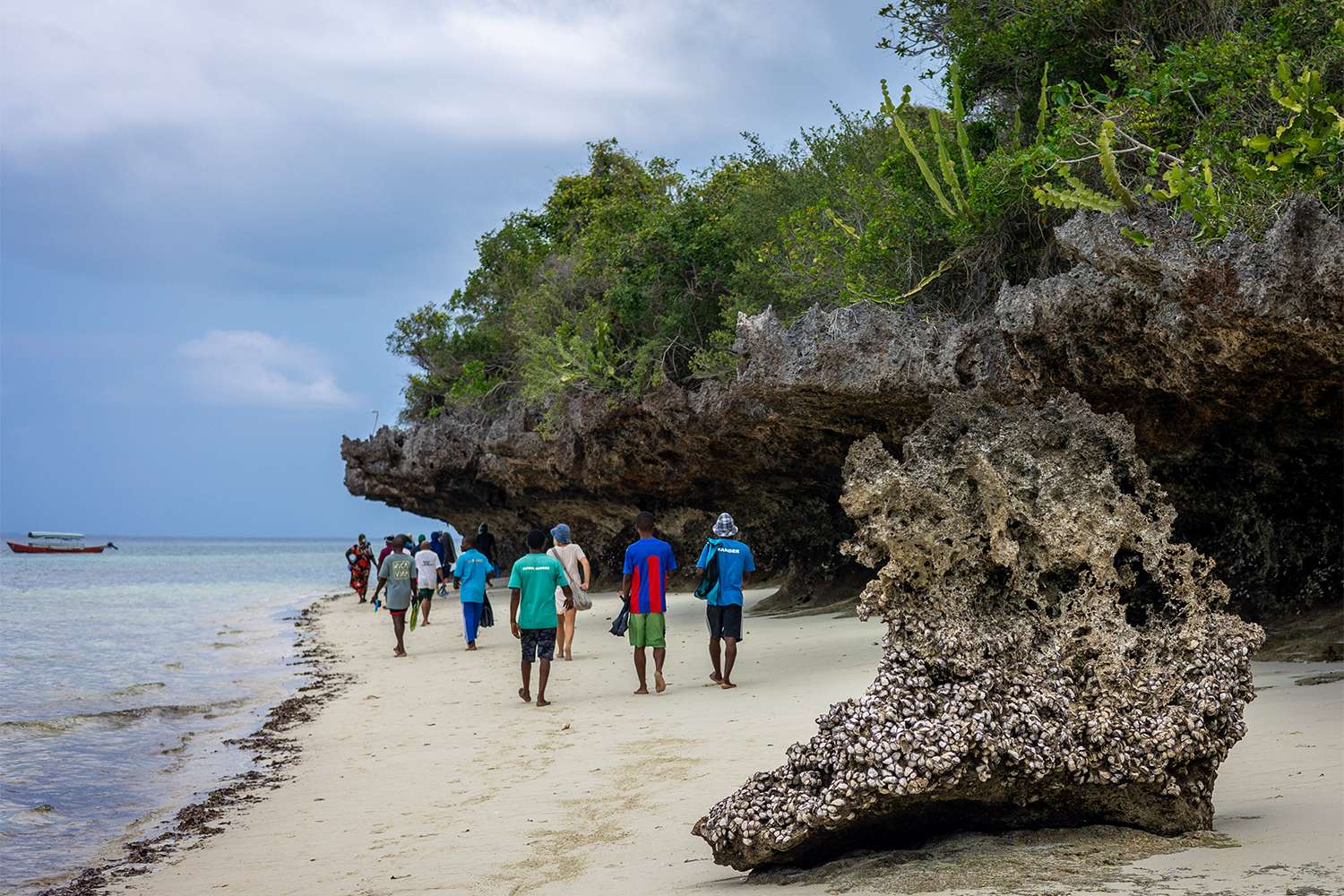
‘Intertidal’ refers to a shore area covered by seawater at high tide and exposed during low tide. Intertidal walks, circling the whole island are only possible during spring low tides (at new and full moon) when the tide is low enough to explore rocky pools and seagrass meadows without snorkeling or even swimming. However shorter intertidal walks are possible at most low tides.
These guided intertidal walks are led by our experienced rangers, who are familiar with the shore, ensure safety and will show you fascinating marine species that are often camouflaged and well-adapted to tidal extremes.
When the tide is very low you can enjoy the incredible exposed sandbar located at the most northerly tip of the island which stretches for more than one km of pristine beach. At the southerly point you can walk through our starfish lagoon to reach the small islets, where you may be fortunate to see fish eagles battling for territory.
Birding and other wildlife observations
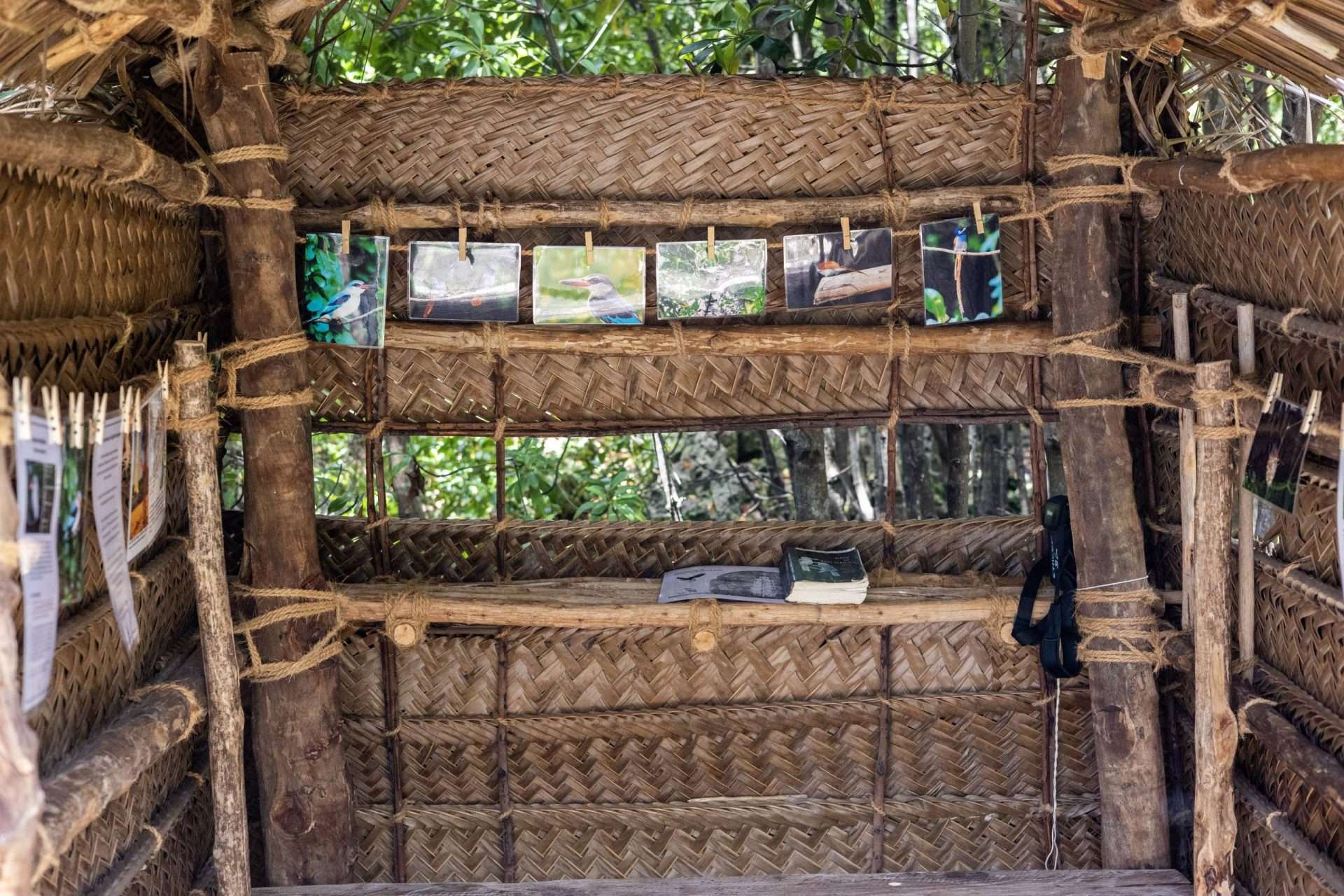
For budding ornithologists our bird hyde gives you an ideal vantage point to watch some of the island’s stunning bird species. This could include the flamboyant mangrove kingfisher (Halcyon senegaloides) and its cousin the African Pygmy Kingfisher (Ispidina picta), the elusive Lilac-breasted Roller (Coracias caudatus) and the endemic Zanzibar Mouse-coloured Sunbird (Cyanomitra verreauxii zanzibarica).
At the shore, you will see a range of herons and waders, including the unusual Crab Plover (Dromas ardeola), the WIO near-endemic Dimorphic Egret (Egretta dimorpha) and the African Fish Eagle (Haliaeetus vocifer). Search the skies above the forest reserve and islets and you may be lucky enough to see other raptors that have been recorded on Chumbe, including the Pomarine Skua (Stercorarius pomarinus) and African Hobby (Falco cuvierii). See our Conservation Page for more information.
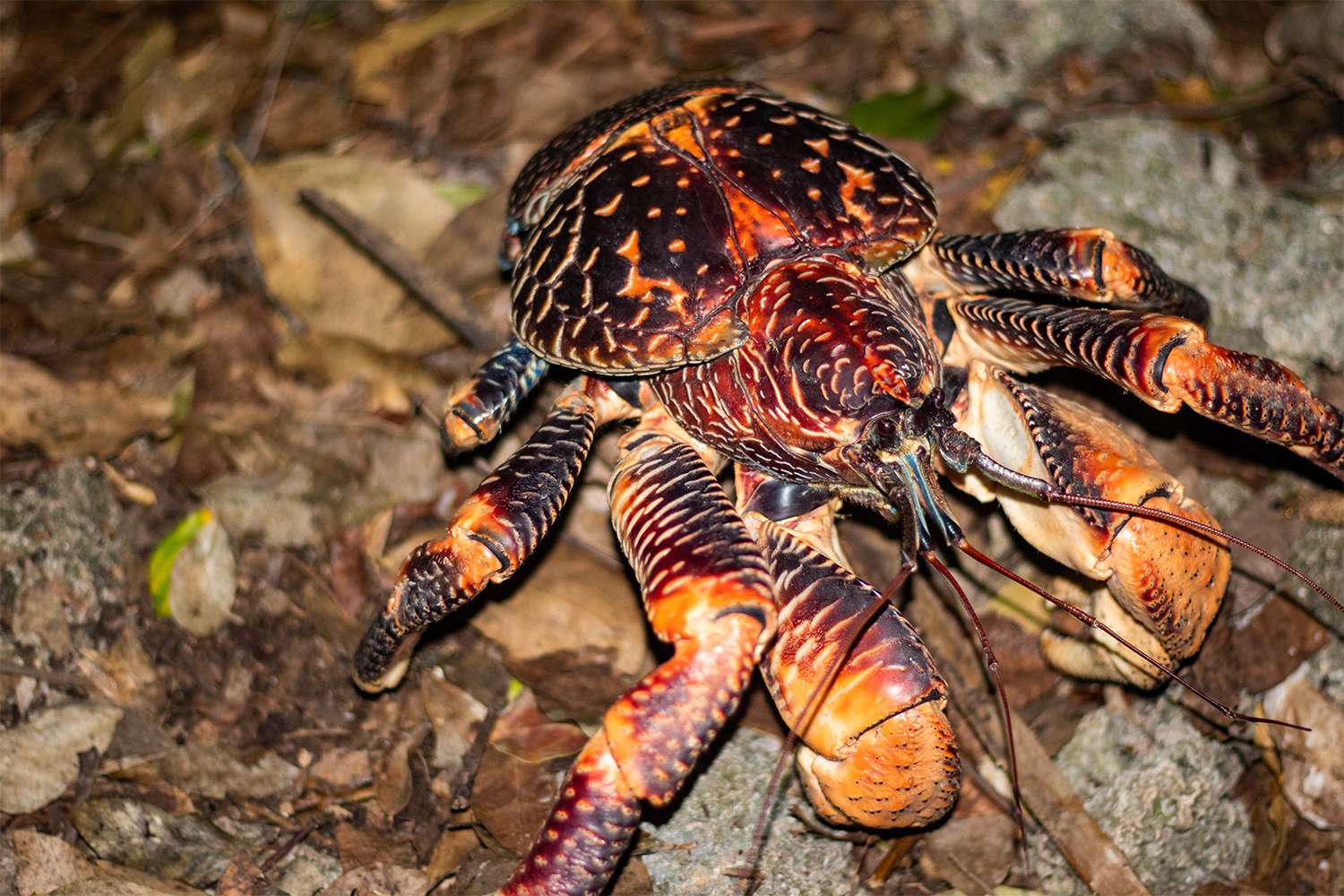
Coconut Crab Walk
In the evening lodge guests can join our rangers to seek out the giant coconut crabs in the coral rag forest. These crabs (Birgus latro) are ‘vulnerable to extinction’ (based on the IUCN Red List) but on Chumbe we protect a flourishing population. They can reach enormous sizes (>1 meter leg spans, weighing up to 4kg) and are the largest living land crabs in the world! During the day, they hide in caves and crevices, but after sunset, they roam around looking for food. Although coconuts are their preferred diet, they are scavengers and eat almost everything they can find. See our Conservation Page for more information.
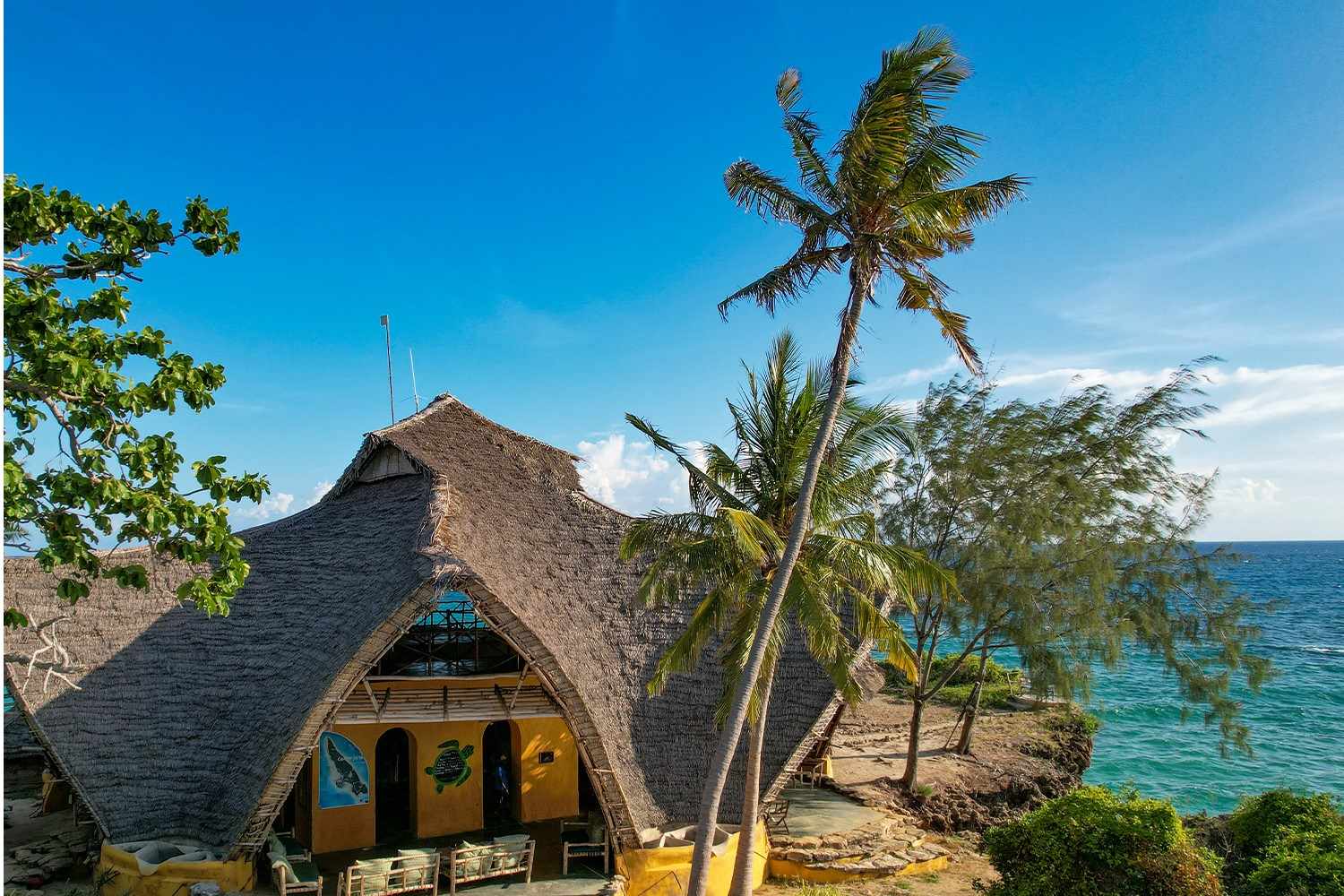
The Visitor Centre
The impressive structure of the Education Centre houses Chumbe’s key operation centres, including a classroom for education and the restaurant with terraces overlooking the Indian Ocean. The immense roof structure has been built over the restored ruins of the former lighthouse keepers’ house, and includes information and exhibits about the Chumbe nature reserve for all our visitors.
Historical Monuments
Lighthouse
Climb the 132 steps to the top of the lighthouse to enjoy spectacular views of the turquoise seas between Tanzania mainland and Zanzibar, still plied by dhows unchanged for a thousand years.
This historic lighthouse was built by the Sultan of Zanzibar and the British in 1904 and was restored with the start of the Chumbe Project in the 1990s. This important historic monument falls under the jurisdiction of the Zanzibar Ports Corporation (ZPC) and remains a vital navigation aid for the region. It was powered by an AGA gas mechanism since the 1920s and updated in 2013 to function through a solar system.

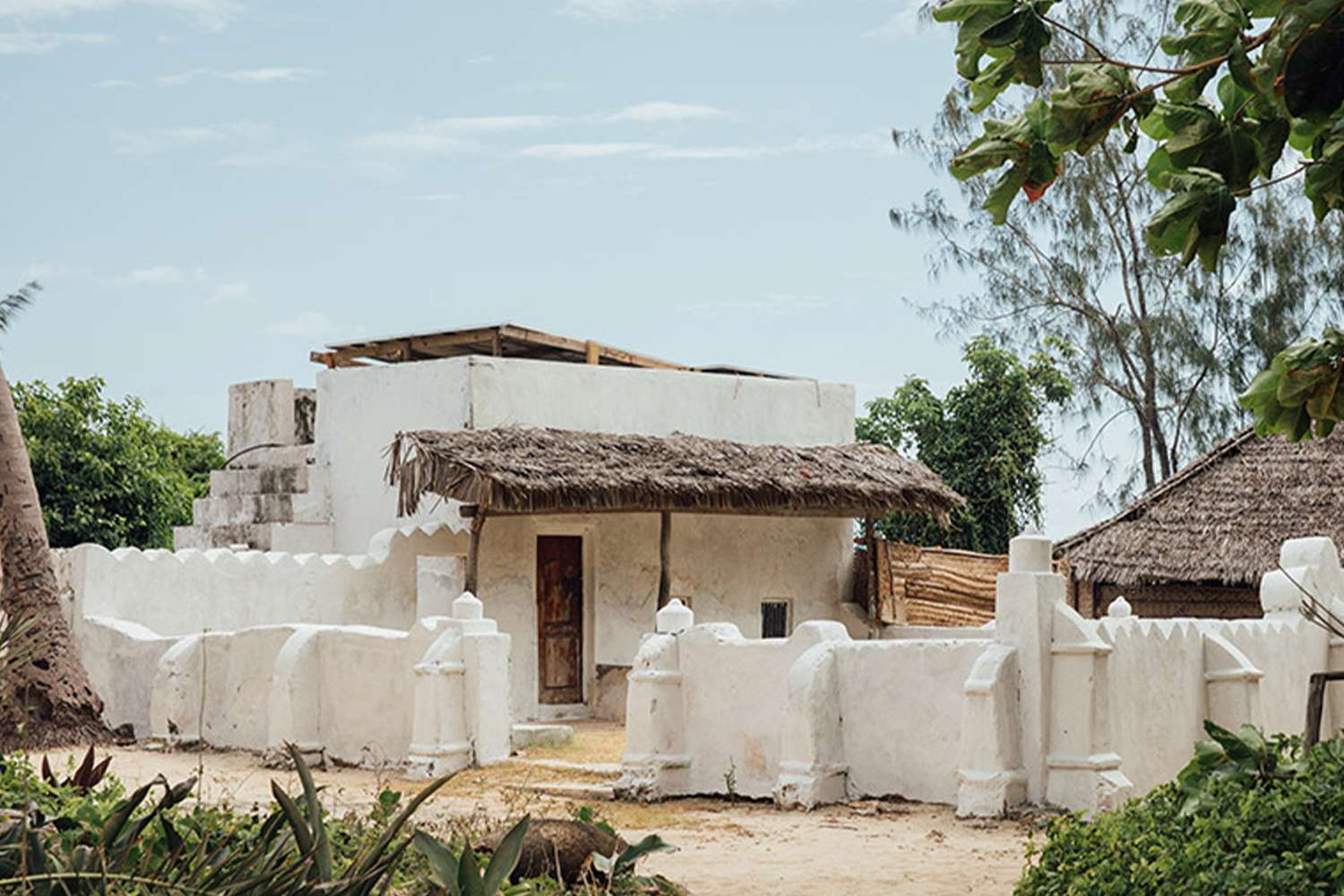
Mosque
The historic mosque on Chumbe Island is one of the few mosques of Indian architecture in Zanzibar, built for the Indian lighthouse keeper by their community at the turn of the century. It is used by our Muslim team members and guests are welcome to visit upon request.
Private Beach
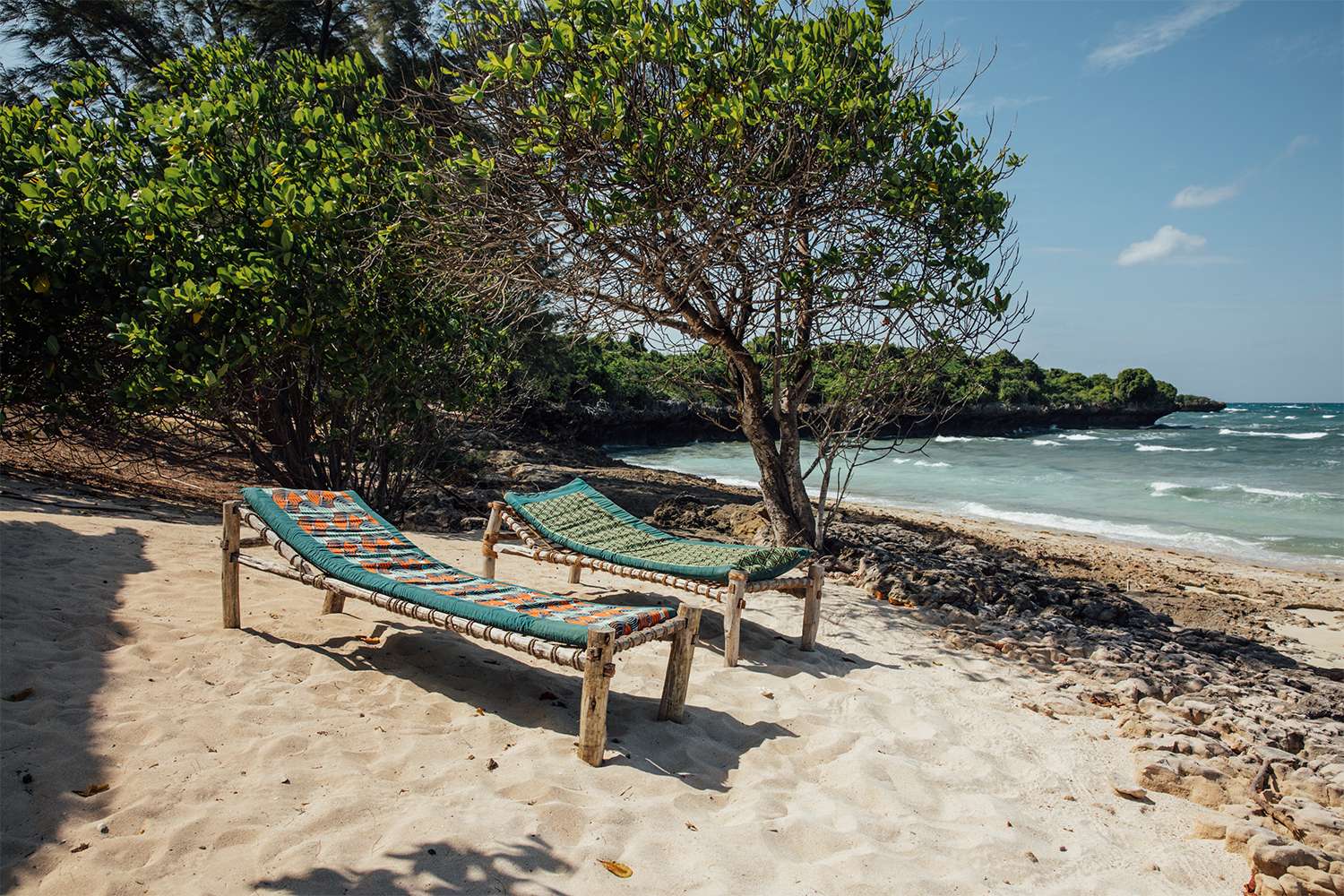
Escape it all to the sounds of waves breaking on the beach and birds singing in thetrees. On this private island, tranquillity is assured.
The island has an array of secluded beach huts, sun loungers and swinging beds for you to relax and enjoy at leisure.
A book exchange is available in the Visitor Centre, as well as a small selection of games and drawing materials. There are also a range of wildlife guidebooks to help you identify the species of birds, butterflies, inter-tidal species and other fauna and flora you might see in this tropical nature paradise.