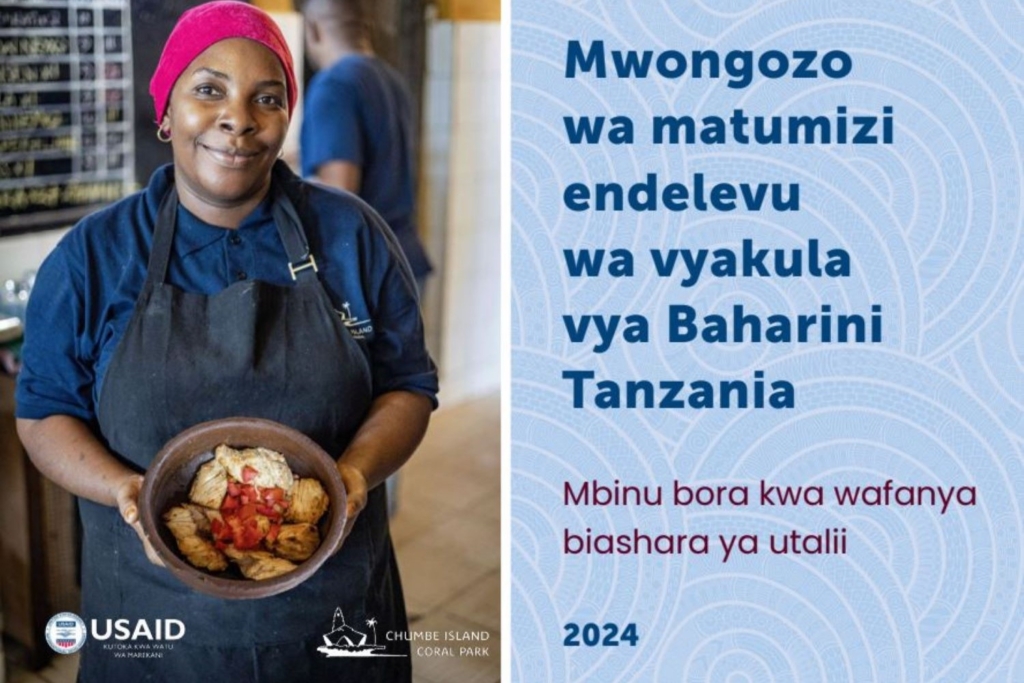
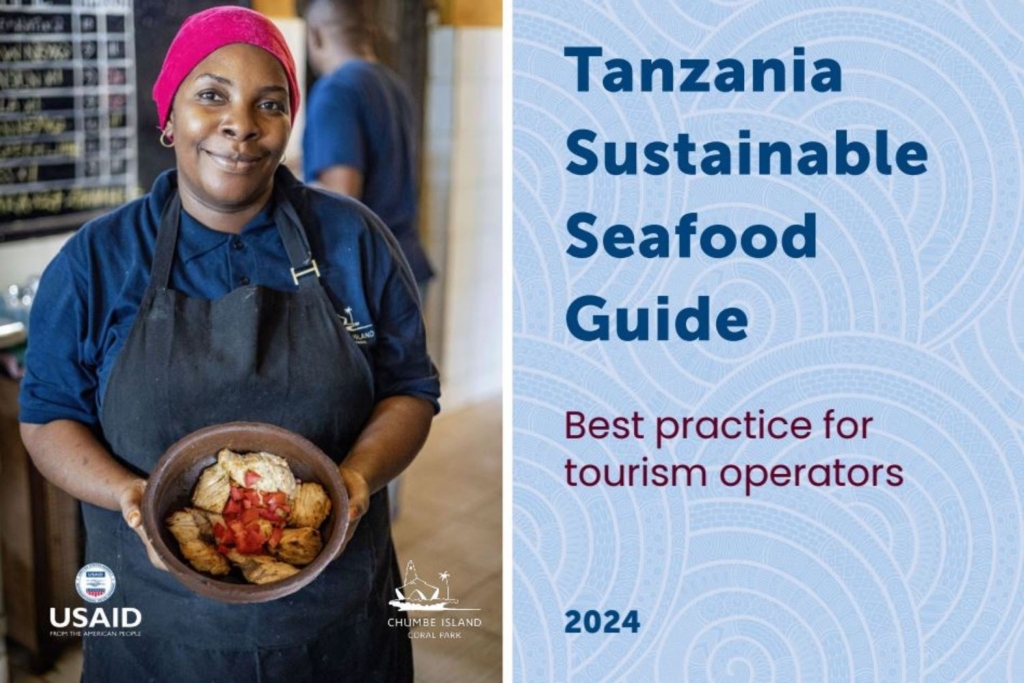
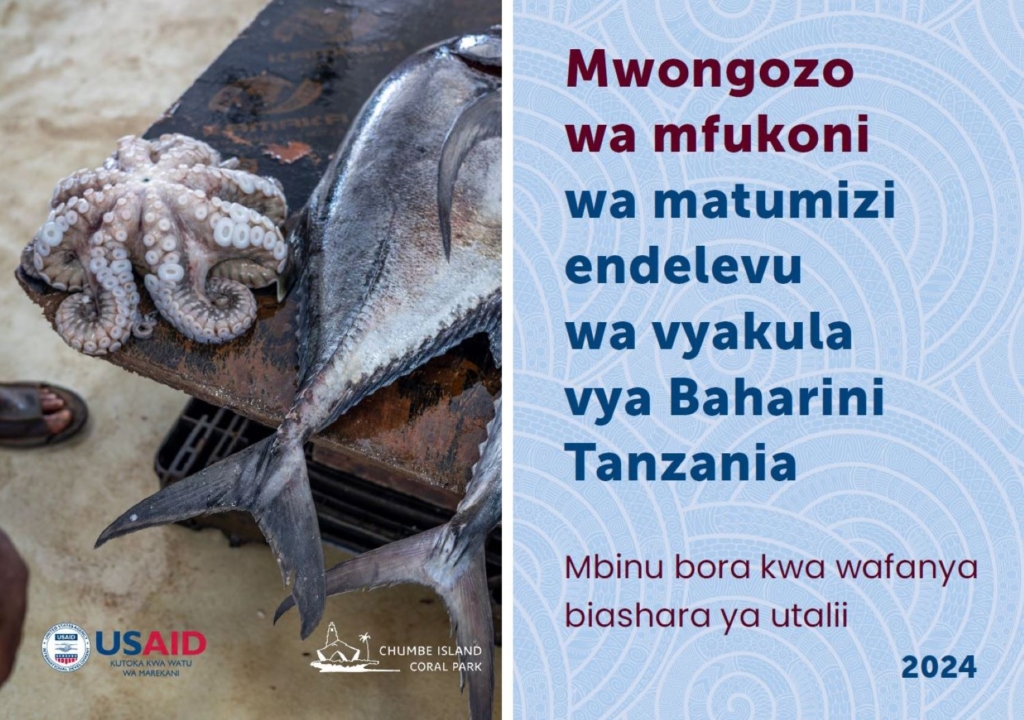
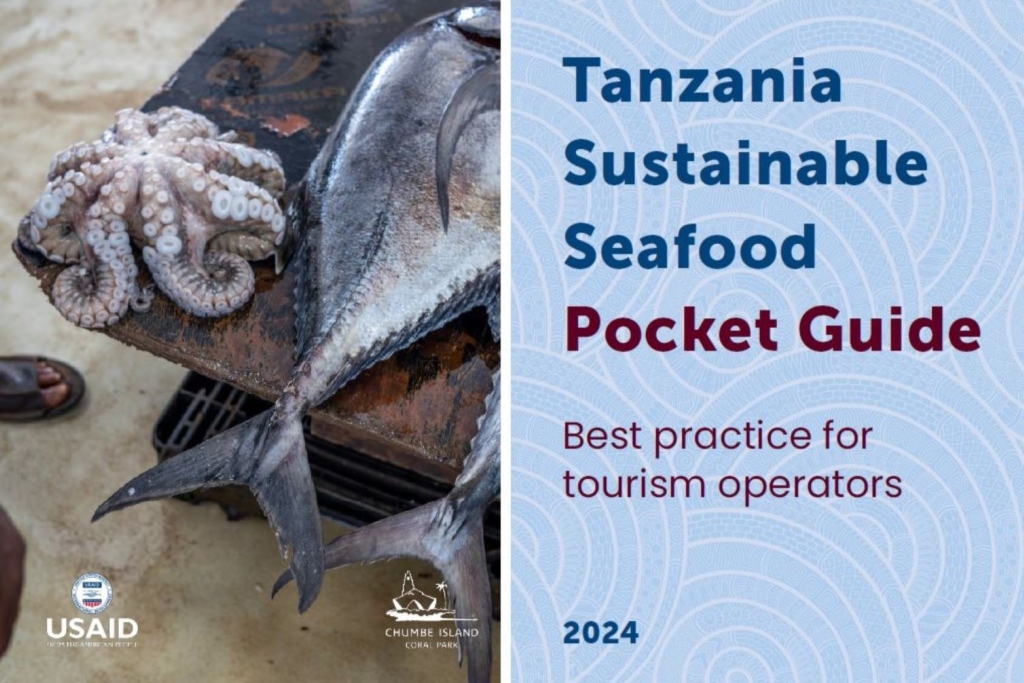
Following the launch of the Zanzibar Sustainable Seafood Guide in 2023, Chumbe Island Coral Park took the next step: The Tanzania Sustainable Seafood Guide broadens its focus to include mainland Tanzania. As tourism continues to rise across both regions, so does the demand for seafood. While fishing remains one of the country’s most important sources of income, and the sustainability of this practice is closely linked to the wellbeing of coastal communities.
In 2024 Chumbe Island Coral Park (CHICOP) partnered with the USAID Heshimu Bahari (Respect the Ocean) Project and the Western Indian Ocean Marine Science Association (WIOMSA) to create a free information resource for tourism businesses, including hotels, restaurants, and tour operators, in mainland Tanzania and in Zanzibar. The 2024 Tanzania Sustainable Seafood Guide raises awareness of overfished or vulnerable marine species, and promotes sustainable alternatives that protect both ocean biodiversity and human health.
Given the high demand, it is crucial to ensure that seafood is harvested responsibly so that fish stocks can recover, ecosystems can remain healthy and local fishing communities can sustain their way of life for generations to come. The guide covers a variety of seafood, including fish and shellfish, and emphasises the importance of reproductive cycles, encouraging choices that allow species time to reproduce before being caught. This approach protects marine ecosystems and helps secure the long-term livelihoods of Tanzanian fishers. As well as highlighting species to avoid, the guide introduces more sustainable fishing practices and uses a simple traffic-light system (red, yellow, green) to help users identify the best species, those to avoid, and those to consume with caution. Alternative options are also provided.
The Tanzania Sustainable Seafood Guide was officially launched at the 13th WIOMSA Scientific Symposium in Mombasa!